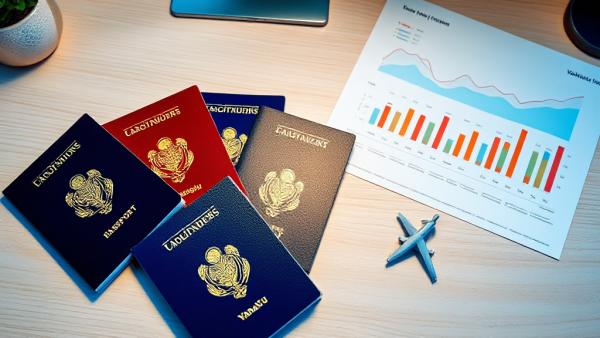
Family Applications for Vanuatu Citizenship: A Preparation Checklist
A family application for Vanuatu citizenship is not several separate applications stapled together. It is one application with several people inside it, and that single fact changes almost everything about how you prepare. One set of forms, one submission window, one due diligence process, and one outcome that applies to every applicant named on the file. The practical challenge is rarely eligibility itself. It is coordination: making sure a spouse, two children, and a principal applicant all have documents that are current, consistent, and certified in the right way at the same time. For a broader view of how Vanuatu is ranked across different indices before you begin, https://vanuatupassportindex.com/ is a useful starting reference. What follows is a working checklist for parents who want to bring a spouse and children through one application.
Documents to Gather for Every Family Member
Start with the assumption that every person on the application needs the same core document set, and that the weakest document in the family sets the pace for everyone. Build one folder per person rather than one folder per document type; it is far easier to spot a gap when each person’s file stands alone.
For the principal applicant, you will typically need a current passport with sufficient validity remaining, a certified copy of the biographical page, birth certificate, marriage certificate if applicable, and a police clearance certificate from each country of residence over a defined recent period. Professional and financial references are commonly requested as well. Keep in mind that police clearances are the classic bottleneck: they expire, they take weeks to issue, and they are issued per country, so a family that has lived in two jurisdictions needs clearances from both.
For a spouse, the document set mirrors the principal applicant’s, with one addition that catches families out: evidence of the marriage itself. A marriage certificate is usually not enough on its own if it was issued many years ago or in a jurisdiction with limited record-keeping. Expect to supply corroborating evidence such as a joint tenancy agreement, shared bank statements, or a family registry extract. If the spouse has changed names through marriage, every document should reflect a consistent name, or you should include the legal instrument that explains the change.
For children, the requirements shift with age. Minor children normally need birth certificates showing both parents, passports, and often a consent or guardianship document if one parent is not applying or is deceased. Older children approaching the age of majority may need additional declarations, and any child who is a dependant by reason of disability will usually require medical documentation. It is worth confirming the current dependant age threshold before you assemble anything, because it determines whether a university-age child can be included at all.
Finally, handle certification deliberately. Certified copies, notarised translations, and apostilles are three different things, and a document can be correct in substance while being rejected for form. Use a single certifying authority for the whole family where possible so that the formatting is consistent across the file.
Timing the Application as a Single Unit
The single most common family mistake is submitting documents as they arrive. Because the application is assessed as one file, a police clearance that is valid in March may be stale by the time the last child’s birth certificate is legalised in June. Work backwards from a target submission date instead, and treat the whole family as one deadline.
Map the long-lead items first. Police clearances, apostilles, and translations from non-English-speaking jurisdictions are usually the slowest. Birth and marriage certificates from countries with central registries can also take weeks to retrieve, especially if the original was never digitised. Once you know your slowest item, you can schedule everything else around it.
Then build a simple shared calendar with three columns: document, responsible adult, and target date. Give each item a buffer of at least two weeks beyond the expected turnaround. If you are coordinating with an agent or immigration adviser, agree on a single point of contact for the family so that requests do not get duplicated or, worse, dropped because each parent assumed the other had handled it.
One more timing consideration that families often overlook: passport validity. If a child’s passport expires within the assessment window, renew it before you submit rather than during processing. Substituting a passport mid-application creates administrative work and can reset parts of the review.
Dependants, Declarations, and Consistency
Dependants are where family applications become genuinely complex, because the definition of a dependant is not uniform and the supporting evidence is heavier. Decide early who is being included and on what basis, and then make sure the story told by your documents matches the story told by your forms.
Consistency is the quiet requirement running through the entire file. Addresses, spellings of names, dates of birth, and employment histories should match across every document and every form. Where they cannot match, because a name was transliterated differently or an address changed, include a short written explanation rather than leaving a reviewer to guess. A one-page cover note that flags known discrepancies is a small effort that prevents large delays.
Declarations matter too. Source of funds information, where requested, should be coherent across the family rather than presented as unrelated fragments. If a spouse is contributing to the household financially, their documentation should support that. And if any family member has a prior immigration refusal, overstay, or criminal record, disclose it. Undisclosed issues found during due diligence are far more damaging than disclosed ones that can be explained.
Keep a master index at the front of the file listing every document, the person it belongs to, and the page number. Reviewers appreciate it, and it forces you to notice the moment a document is missing.
Payment, Fees, and Final Checks
Budgeting for a family application is not simply the headline fee multiplied by the number of people. Government fees, due diligence charges, professional fees, translation and certification costs, and courier expenses all scale with the number of applicants, and some charges are per-family rather than per-person. Ask for a written breakdown that separates these categories before you commit.
Payment logistics deserve their own check. Confirm who is paying, from which account, and whether the receiving party requires funds to originate from the principal applicant specifically. Many programmes expect the principal applicant to be the source of the contribution, which can complicate matters if the money is held jointly or in a spouse’s name. Arrange bank letters or statements that make the source of funds clear.
Before submission, run a final family-wide review. Confirm every passport is valid well beyond the expected processing period. Confirm every certificate is certified in the required form. Confirm the family index is complete and paginated. Confirm the payment schedule and the contact details for each adult applicant. Then, and only then, submit.
Families who treat the application as one coordinated project, rather than a set of parallel personal errands, consistently find the process more predictable. The paperwork is substantial, but it is finite, and a checklist that assigns each item to a named person with a date is usually the difference between a file that moves and one that stalls.
Frequently Asked Questions
Can I include my spouse and children in the same Vanuatu citizenship application?
In most family applications, yes. A spouse and dependent children are typically included on one file alongside the principal applicant, which means one submission and one due diligence process. The exact dependant criteria, including age limits, should be confirmed against current programme requirements before you begin gathering documents.
How long do police clearances and certificates stay valid during processing?
Validity periods vary by issuing authority, but clearances are generally considered current for a limited window, often measured in months. Because a family file is assessed as a unit, it is best to obtain the slowest clearances last so that they are as fresh as possible at submission rather than at the start of preparation.
What happens if one family member’s documents are incomplete at submission?
An incomplete file usually delays the entire application rather than just that individual, since the family is reviewed together. This is why a master index and a single point of contact for the family are so valuable. Missing items are much easier to catch before submission than to resolve after a request for further information.
Should children’s documents be certified the same way as adults’?
Yes, certification, translation, and legalisation requirements generally apply to every applicant regardless of age. Using the same certifying authority for the whole family helps keep formatting consistent and reduces the risk of one document being rejected on form while the rest of the file is accepted.